Breast Augmentation in Frisco, TX
Breast augmentation in Frisco and Plano, TX is performed by board-certified plastic surgeon Dr. Geo N. Tabbal to enhance breast volume, symmetry, and upper-body proportion using FDA-approved smooth silicone or saline implants. I personally consult with and follow up on every patient at my Frisco office, while outpatient surgery is performed under general anesthesia at Joint Commission-accredited Baylor Scott & White Surgicare at Plano Alliance with a board-certified physician anesthesiologist. On this page I answer the questions I hear every day from breast augmentation patients in my Frisco office. Whether you’re just beginning your research or preparing for breast surgery, my goal is to provide clear, evidence-based information so you can make an informed decision with confidence.
Written and medically reviewed by Geo N. Tabbal, M.D., board-certified plastic surgeon. Last reviewed: November 17th, 2026.

Quick Breast Augmentation Summary
Procedure: Breast augmentation using FDA-approved smooth silicone or saline implants
Primary Goals: Enhance breast size, restore volume post-pregnancy, and improve body balance
Anesthesia & Safety: General anesthesia administered by a board-certified physician anesthesiologist
Length & Setting: 1 to 2 hours outpatient procedure
Preferred Technique: Dual-plane placement via an inframammary crease incision
Recovery: Light activity in 1–3 days; exercise resumes in 4–6 weeks
Where: Surgery at Baylor Scott & White Surgicare at Plano Alliance (Plano); consultations and follow-ups at 8501 Wade Blvd., Frisco TX
Cost: Starts at approximately $9000
Explore Topics On This Page:
- What Is Breast Augmentation?
- Breast Augmentation Candidate
- Breast Augmentation Consultation
- When is a Breast Lift Needed?
- Breast Implant Options
- Breast Implant Placement
- Breast Augmentation Incisions
- Smooth Breast Implants
- What Does A Breast Augmentation Entail?
- Breast Augmentation Recovery
- Breast Augmentation Risks & Complications
- Breast Augmentation Scars
- Why Choose Dr. Tabbal?
- Breast Augmentation Cost
- Breast Augmentation FAQs
- Where Is Breast Augmentation Performed in Plano and Frisco, TX?
What Is Breast Augmentation?
Breast augmentation, also called augmentation mammoplasty, breast enlargement or a “boob job,” is cosmetic breast surgery that increases breast size, improves breast shape, restores lost volume, or corrects asymmetry. It is most often performed as breast implant surgery, using silicone or saline breast implants. Fat transfer breast augmentation, which uses your own fat instead of an implant, may be an option for select patients who want only a modest increase in size.
Patients usually come to me with one or more of these goals:
- Increasing breast volume
- Restoring fullness lost after pregnancy, breastfeeding or weight loss
- Improving symmetry
- Adding fullness to the upper part of the breast
- Improving overall body proportion
Many people think of breast augmentation as a change in cup size. I think of breast enhancement as a matter of proportion. Breast implant size is measured in cubic centimeters (cc), and that number is only part of the result. What matters more is how that implant fits you: your body frame, your chest width, the breast tissue you already have, and the quality of your skin. The goal should always be a natural-looking result that complements your body rather than overpowers it.
Who Is a Good Candidate for Breast Augmentation?
You are likely a good candidate for breast augmentation if you are a healthy adult who wants fuller or more proportionate breasts and have realistic expectations about surgery and recovery. Other factors that may make you a good candidate include:
- Have lost volume after pregnancy or weight change
- Have noticeable breast asymmetry
- Do not smoke, or are willing to stop before surgery
Not every patient has the same goals or anatomy, and breast augmentation alone is not always enough. An implant adds volume. It does not change where the breast sits on the chest. Anything you find undesirable about the shape or position of your breast before surgery will usually look more noticeable, not less, once an implant is placed behind it. If your breasts have dropped with age, pregnancy or weight change, the next section applies to you.
Do I Need a Breast Lift Instead of, or With, Breast Implants?
You probably need a breast lift, with or without an implant, if your nipple sits below the breast fold or you have a lot of loose skin. A common misconception is that a larger implant will lift a sagging breast. While a breast implant adds volume, it does not reliably raise the nipple or remove excess skin. In that situation a bigger implant simply makes the breast heavier, and a heavier breast tends to sag further over time.
At your consultation I take several measurements, including the vertical distance from the nipple to the crease beneath the breast (the inframammary fold). If that distance is longer than 9 to 10 cm with the skin on maximal stretch, a breast lift with implants should be strongly considered. Leaving out a lift that is needed can lead to a less-than-optimal result.
Think of it this way: a breast lift makes the shape and position of the breast right, so that the implant has something attractive to enhance. For more detail, read my comparison of breast lift vs. breast augmentation.
-
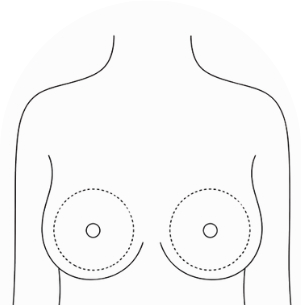
Breast Augmentation
Enhances breast volume while restoring fullness and improving overall balance and proportion.
Ideal for: Patients who are happy with their breast position but would like increased size or upper pole fullness.
-
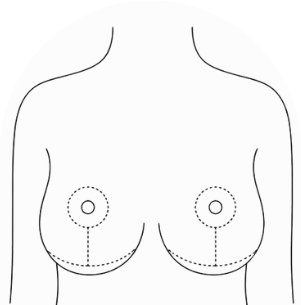
Breast Lift (Mastopexy)
Restores a more youthful breast shape by lifting and reshaping sagging breast tissue.
Ideal for: Patients who are satisfied with their breast volume but would like to improve breast position and shape.
-
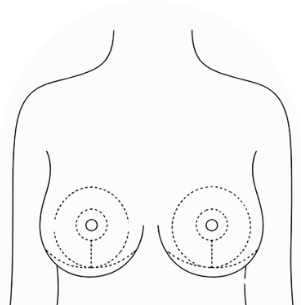
Breast Lift with Implant (Augmentation Mastopexy)
Combines lifting and augmentation to improve both breast position and volume in a single procedure.
Ideal for: Patients who would benefit from both reshaping and additional fullness to achieve their desired result.
What Happens During a Breast Augmentation Consultation?
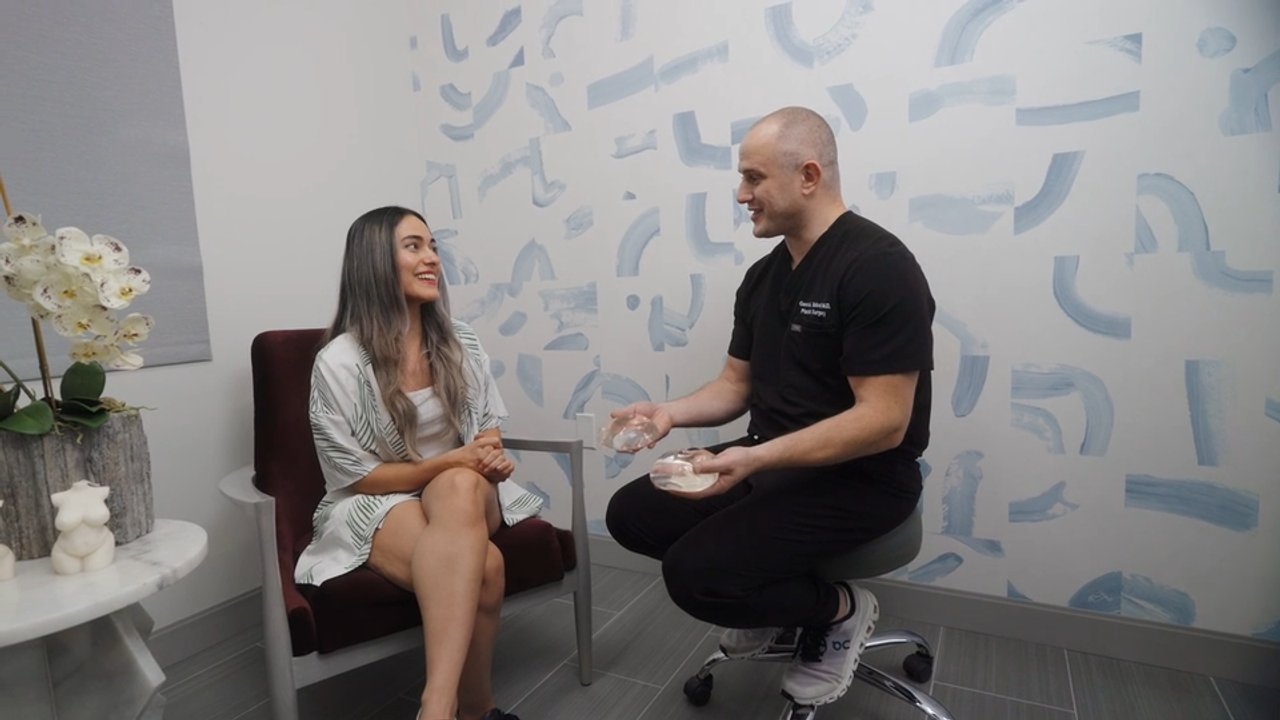
As a board-certified plastic surgeon, I personally conduct every breast augmentation consultation at my Frisco office. We talk through your goals, I examine and measure you, and we build the surgical plan together. I see breast augmentation and breast implant patients from Frisco, Plano, Prosper, McKinney, Allen, Celina and North Dallas.
Choosing to have a breast augmentation is an important and very personal decision. I treat the consultation as a partnership in which we share information in both directions. Your visit will cover:
- Your goals, including photos of results you like
- A physical examination with precise measurements
- Breast implant type, size, profile, placement and incision, and why I recommend what I do for your anatomy
- The results you can realistically expect
- Risks and recovery
- Cost, followed by a written, itemized quote from my team
- Your questions and concerns
I will give you clear and honest details about what to expect, including my candid opinion of what will and will not work for your anatomy. I want you to leave feeling at ease and confident about your next step, whatever that step is.
How Does Dr. Tabbal Plan My Breast Augmentation?
I plan your breast augmentation from measurements, not from a requested cup size. No two breast augmentations are identical, because every patient differs in:
- Chest width
- Rib cage shape
- Breast asymmetry
- Existing breast tissue
- Skin elasticity
- Nipple position
- Lifestyle
- Cosmetic goals
Each of these changes how an implant will sit and move on your chest. Planning around them, and understanding how each surgical decision affects the final result, is how I aim for breasts that look balanced, proportional and natural, not simply larger.
What Breast Implant Options Do I Have?
Many patients who come to me for breast implants in Frisco and Plano arrive focused on implant size rather than the other decisions that must be made. In reality, these factors work together to determine your result:
| Key Implant Decisions | |
|---|---|
| Decision | Why it matters |
| Fill material | Silicone and saline implants differ in feel, rippling risk, incision requirements, and rupture detection. |
| Size and diameter | Implants should fit within the width of the breast. |
| Profile | Profile determines projection, upper-pole fullness, and overall breast shape. |
| Placement | Implant position influences recovery, implant visibility, animation deformity, and long-term appearance. |
| Incision | Incision choice affects scar location, implant control, contamination risk, and future revision options. |
| Surface | Smooth, textured, and newer surface designs differ in safety history and long-term considerations. |
| Cohesivity (when silicone implants are chosen) | The degree of cohesivity determines the feel (soft vs firm), risk of rippling, and shape retention of the implant. |
| Implant shape | Round vs anatomic |
I encourage you to think about the overall appearance you want rather than a specific bra size. Bra sizing varies significantly among manufacturers, which makes cup size an unreliable surgical goal. At your consultation we will take precise measurements, look over your goal photos, and choose implants that match your body.
Should I Choose Silicone or Saline Breast Implants?
Most of my patients choose silicone breast implants, because they tend to look and feel the most natural. Saline remains a good choice for some patients.
| Silicone vs. Saline Breast Implants | ||
|---|---|---|
| Fill Material | Silicone implants | Saline implants |
| Feel | Softer and more natural for many patients | Can feel firmer |
| Appearance | Often more natural, especially in thinner patients | May show more rippling in thinner patients |
| Rupture detection | May be silent and detected on imaging | Usually noticeable because the implant deflates |
| Incision | May require a slightly larger incision | Can often be inserted through a smaller incision |
| Common use | Preferred by most patients seeking a natural feel | Useful for select patients who prefer saline fill |
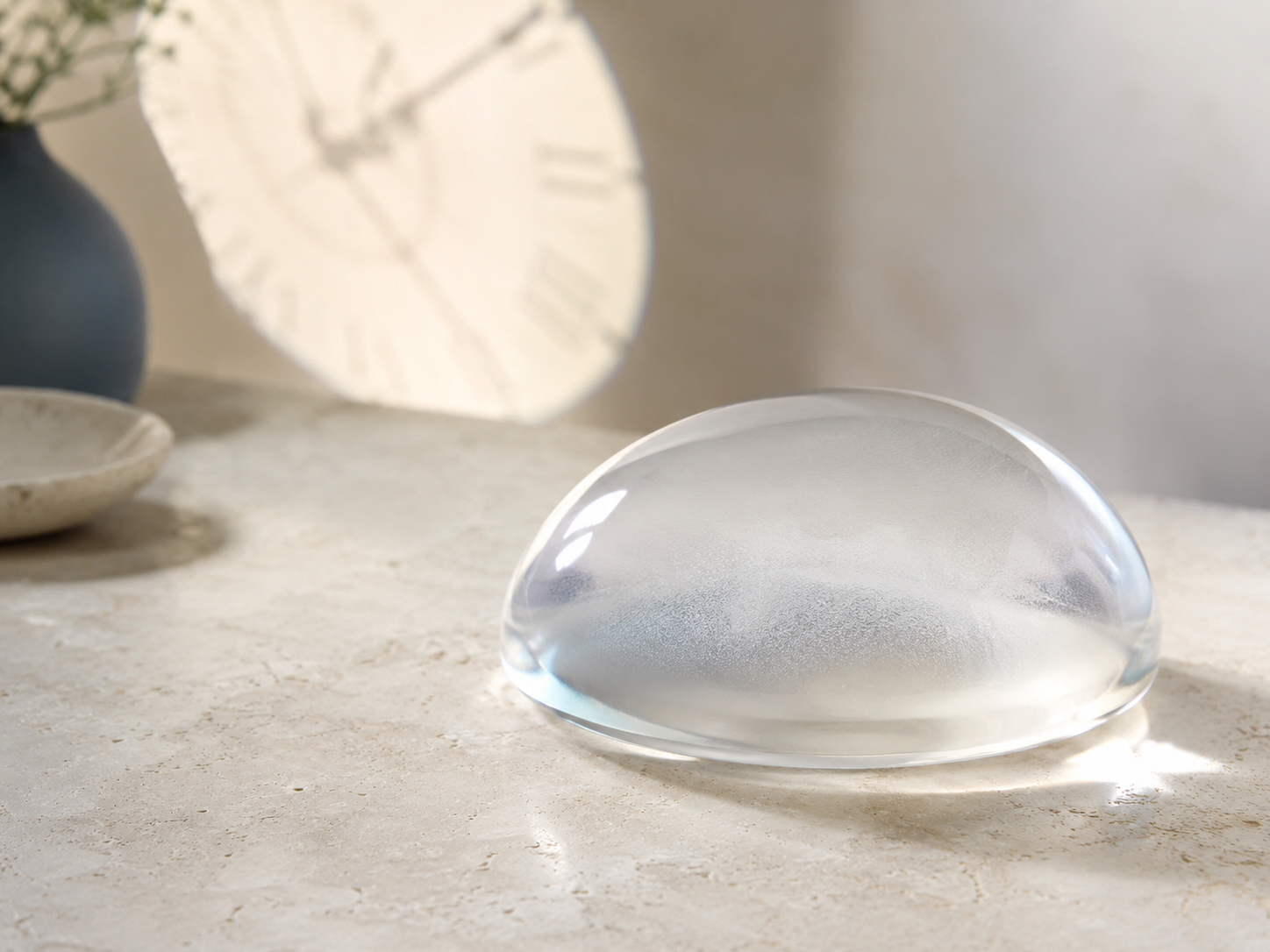
Silicone implants are filled with a cohesive silicone gel that closely mimics the feel of natural breast tissue. Manufacturers make gels with different thicknesses and levels of cross-linking, from moderately cohesive to highly cohesive. The highly cohesive gels are the ones often called “gummy bear” breast implants. The trade-off is mechanical. A more cohesive gel holds its shape better and is less likely to leak or move if the outer shell breaks, but it behaves more like a solid, so it feels firmer and less soft.
Allergan’s Natrelle Inspira breast implants come in three cohesivities: Responsive, SoftTouch, and Cohesive. I often choose Natrelle Inspira SoftTouch breast implants (many patients write it as “soft touch”) because they sit in the middle. They offer a soft, natural feel while retaining their shape well. A more cohesive implant makes sense in particular situations, such as treating a patient who has implant rippling.
Saline implants are silicone shells filled with sterile salt water after they are placed in the breast pocket. That allows a smaller incision, and a rupture is detected immediately. The trade-offs are that saline implants tend to feel firmer and have a greater tendency to ripple, particularly in thinner patients.
How Do I Choose the Right Breast Implant Size?
The right size is the implant that achieves your goals while fitting your frame and protecting the long-term health of your tissue. It is not the largest implant that can fit.
One of the first questions patients ask me is, “What size breast implants will look most natural on my frame?” The answer starts with your own anatomy, not a friend’s advice or a preferred cup size. During your consultation I evaluate:
- Chest width
- Base diameter, or the width of the breast
- Existing breast size
- Soft tissue thickness
- Skin elasticity
- Body proportions
- Athletic lifestyle
- Desired appearance
These measurements tell me which implants are appropriate for your frame. Implant sizes range from roughly 150 cc to more than 800 cc, and most women choose between 250 and 450 cc.
Bring photos. Before-and-after images that reflect the shape and size you want are helpful. So are images of results you consider a bit too small and results that look slightly too large for your taste, because together they show me where your preferences begin and end.
Bigger is not always better. An implant that is too large for your body stretches the tissue that has to support it. Over time that can cause implant malposition, bottoming out, and premature sagging (ptosis). For this reason I suggest an implant that complements your natural shape and respects the limits of your tissues.

Should Breast Implants Go Over or Under the Muscle?
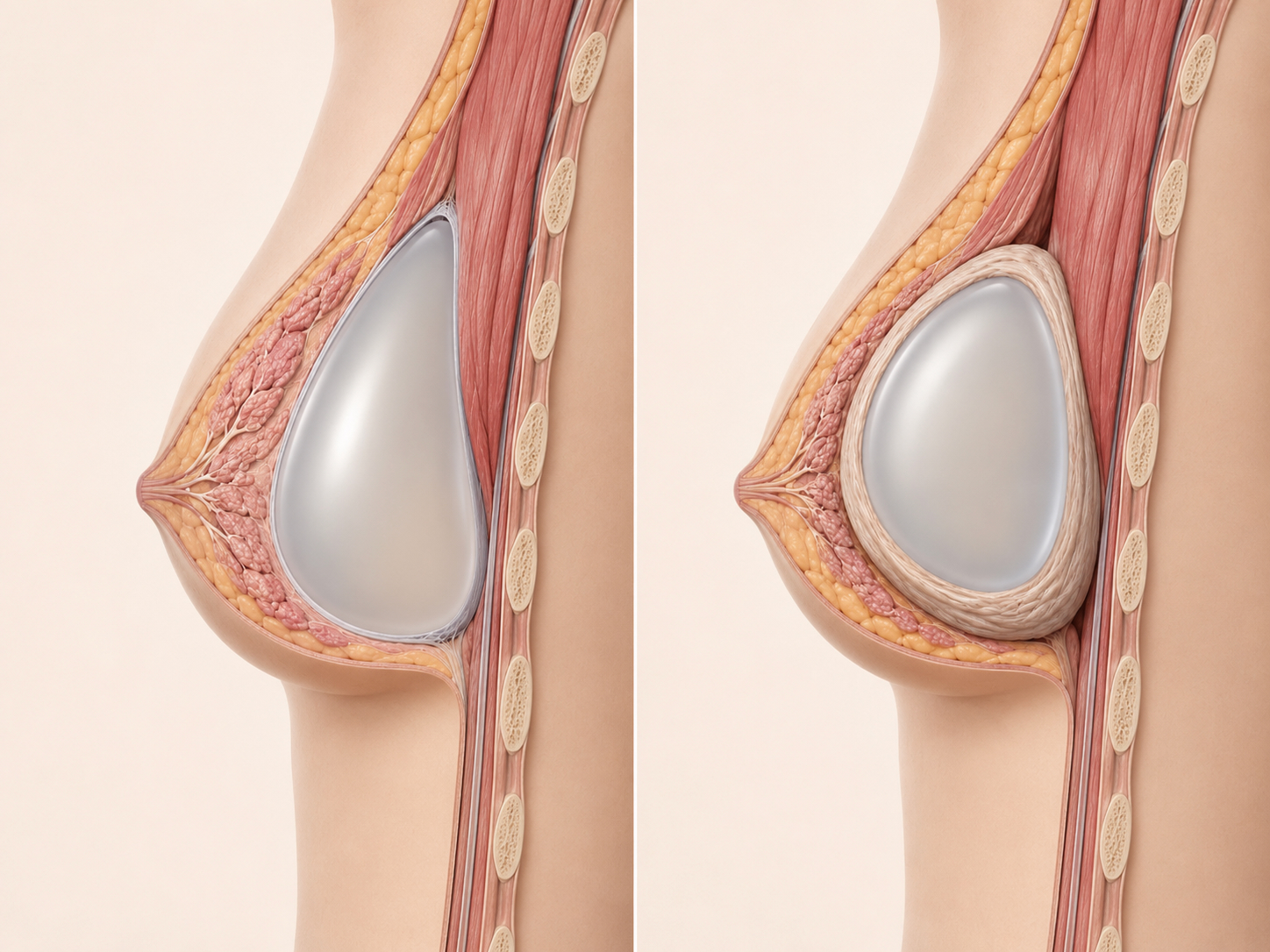
Determining where your implant should sit depends on your anatomy, how much breast tissue you have, your lifestyle, and the result you want. For most patients, I recommend dual-plane placement, in which the upper half of the implant sits under the chest muscle and the lower half sits under breast tissue. For patients with enough tissue to cover the implant, I also commonly choose a subfascial placement.
| Breast Implant Placement Options | ||
|---|---|---|
| Placement | Location | Key consideration |
| Subglandular | Above the muscle and its fascia | Less discomfort, but higher risk of visible rippling and capsular contracture in some patients |
| Subfascial | Above the muscle but beneath its fibrous tissue layer (fascia) | Natural movement and no animation deformity, but best for patients with adequate tissue coverage |
| Submuscular | Completely beneath the pectoralis major muscle | Additional coverage, but less commonly used as a complete placement technique |
| Dual-plane | Partially below the muscle | Often provides a natural upper-pole transition with improved implant coverage |
What Is Subglandular (Over-the-Muscle) Breast Augmentation?
In subglandular placement, often called over the muscle, the implant sits directly beneath the breast tissue, above the pectoralis major muscle and its fascia. It was the first and most common placement when breast augmentation was being developed.
Advantages:
- Less post-operative discomfort
- Slightly shorter recovery
- No animation deformity (movement of the implant when you flex your chest muscles)
- Easier breast revision surgery in certain situations
Disadvantages, which follow from having less soft tissue over the implant:
- More visible implant edges
- Increased implant rippling
- Less natural upper-pole contour in thin patients
Subglandular placement also carries a higher risk of capsular contracture than placement under the muscle. For these reasons I rarely recommend it.
What Is Subfascial Breast Augmentation?
In subfascial breast augmentation the implant sits above the chest muscle but underneath the fascia , the fibrous tissue layer that covers the muscle.
Because the implant is not under the muscle, the breast moves more naturally and the chance of animation deformity is reduced. The fascia also separates the implant from the breast tissue, and this is thought to lower the risk of capsular contracture compared with traditional subglandular placement.
Subfascial placement can provide enhanced cleavage and a quicker, less painful recovery. Its main limitation is coverage: it is not a good option for thin patients who do not have enough breast tissue to cover the implant.
What Is Submuscular (Under-the-Muscle) Placement?
In submuscular placement the implant sits beneath the pectoralis muscle. It became popular because the muscle provides additional soft tissue coverage.
Benefits:
- Improved implant camouflage
- Reduced visibility of implant edges
- Less rippling in thin patients
- More natural upper-pole contour
Complete submuscular placement never became common, however, because the lower portion of the breast lacks muscular coverage. Dual-plane placement evolved to address that problem.
What Is Dual-Plane Breast Augmentation, and Why Does Dr. Tabbal Usually Recommend It?
Dual-plane augmentation places the top half of the implant under the pectoralis muscle and the bottom half beneath the breast tissue. I usually recommend it for my breast augmentation patients in Frisco and Plano, Texas.
The reasoning is anatomical. The muscle covers the upper breast, where soft tissue is thinnest and an implant edge is most likely to show. The lower breast is left free to expand, so the implant fills it naturally. The result is often a more natural breast shape with improved implant support.
Advantages of dual-plane placement:
- Natural upper-pole transition
- Better implant coverage
- Improved lower-pole expansion
- Lower visibility of implant edges
- Favorable long-term shape
What Are the Dual-Plane I, II and III Variations?
The three dual-plane variations differ in how much the muscle is separated from the breast tissue, which controls how much the implant can fill the lower breast. Many patients have never heard of them, but they are what allow me to tailor the operation to your anatomy.
-
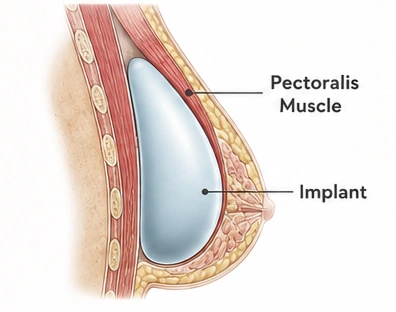
Dual Plane I
Only the lower attachments of the pectoralis muscle are released. The connection between the muscle and the breast tissue is preserved.
Best suited for: Minimal breast sagging, tight skin, good nipple position, mild volume loss.
-
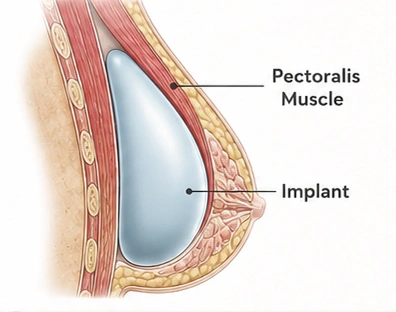
Dual Plane II
The lower muscle attachments are released, and some separation is made between the muscle and breast tissue so the implant better fills the lower breast.
Best suited for: Mild breast descent, loss of upper-pole fullness, mild postpartum changes.
-
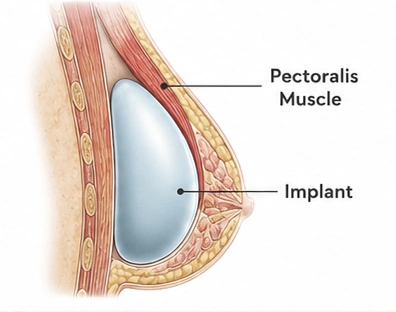
Dual Plane III
Greater separation is made between the muscle and breast tissue, allowing additional lower-pole expansion.
Best suited for: More significant breast deflation, greater lower-pole laxity, borderline ptosis.
Dual Plane I is one of my most frequently performed techniques. Dual Plane II can improve breast shape without a breast lift in carefully selected patients. If the nipple has descended substantially, however, a breast lift is often still necessary, even with Dual Plane III.
Are Smooth or Textured Breast Implants Safer?
Textured implants have been linked to a rare lymphoma called BIA-ALCL, and the FDA states that the risk is higher with textured surfaces than with smooth ones. This is why I prefer to use smooth, round silicone gel implants.
Textured implants were originally created to help keep implants in place and to decrease the chance of capsular contracture. They have since been associated with breast implant-associated anaplastic large cell lymphoma (BIA-ALCL), a rare cancer of the immune system that develops in the capsule surrounding the implant. It is not breast cancer. The overall risk remains very low, but the association has significantly changed implant selection worldwide.
Newer surfaces, including micro- and nano-texturing, were designed to provide some of the potential benefits of texturing, such as a lower risk of capsular contracture, without the same link to BIA-ALCL. I do not believe enough long-term data exists yet to fully support those claims, so I continue to prefer smooth implants.
What Happens Step-by-Step on the Day of Breast Augmentation Surgery?
Breast augmentation is an outpatient operation that typically takes 1 to 2 hours under general anesthesia. Most patients go home within a few hours with a responsible adult.
How Do I Prepare for Breast Augmentation Surgery?
Preparation begins well before the day of surgery. A well-prepared patient typically has a smoother recovery and fewer unexpected issues.
Medical clearance. Depending on your age and health history, your preoperative evaluation may include basic lab testing, clearance from your primary care physician, and a thorough review of your medications and supplements so that we can stop any that increase the risk of bleeding.
Preoperative instructions. I will typically ask you to:
- Avoid eating or drinking after midnight before surgery
- Stop nicotine use well in advance, ideally four or more weeks
- Avoid blood-thinning medications when appropriate
- Arrange transportation and post-operative support
Smoking and nicotine exposure significantly increase the risk of complications, including delayed healing and poor scar quality.
What Happens on the Day of Surgery?
Surgery takes place at a Joint Commission-accredited outpatient surgical facility under general anesthesia administered by a board-certified anesthesiologist. The day generally follows these steps:
- Arrival and preparation. You check in and have a final assessment. I make my surgical markings, and your anesthesiologist evaluates you.
- Anesthesia. General anesthesia is administered so that you are fully asleep and comfortable throughout the procedure.
- Incision. I make the incision, most commonly in the inframammary crease.
- Pocket. I create a precise pocket for the implant.
- Sizing. I place a temporary breast implant sizer and check shape and symmetry carefully in real time.
- Implant. I remove the sizer and insert the permanent implant using a “no-touch” technique.
- Closure. I close the incisions in multiple layers.
- Recovery room. You are monitored as you wake up. Mild grogginess from anesthesia is common. A surgical bra or compression garment is placed.
- Home. Most patients return home within a few hours with a responsible caregiver.
You return to my Frisco office the next morning for your first postoperative check.

“My experience with Dr. Geo N. Tabbal and his fantastic staff exceeded my expectations. He cares for his patients and has excellent bedside manners; you never feel alone before and after the procedure. He checks on you, allows you to connect with him, and is always readily available for his patient's needs.”
What Are the Risks of Breast Augmentation?
The main risks are capsular contracture, implant malposition, asymmetry, infection, bleeding, changes in sensation, implant rupture, rippling, and the need for revision surgery. Understanding these risks is not meant to discourage surgery, but to ensure realistic expectations and informed consent. Breast augmentation is generally safe when it is performed by a board-certified plastic surgeon in a Joint Commission-accredited facility with a board-certified anesthesiologist, but complications can occur with any operation.
Why Choose Dr. Tabbal to Perform Your Breast Augmentation?
Choosing a plastic surgeon is one of the most important decisions you’ll make. Beyond before-and-after photos, your surgeon’s education, training, experience, communication style, and commitment to patient safety all play a critical role in achieving an outstanding result. Dr. Geo N. Tabbal is committed to providing exceptional surgical care with a personalized approach from your initial consultation through your final follow-up visit.
Dr. Tabbal is a board-certified plastic surgeon in Frisco, TX, certified by the American Board of Plastic Surgery since 2017, and his practice concentrates on cosmetic surgery of the breast, body and face. You can judge his breast augmentation results for yourself in his breast augmentation before and after photos, and read what his patients say in their testimonials.
Elite Surgical Training
Dr. Tabbal completed his medical education at the prestigious New York University School of Medicine, one of the nation’s premier medical schools. He then earned acceptance into the highly competitive integrated plastic surgery residency at UT Southwestern Medical Center, widely regarded as one of the top plastic surgery training programs in the United States. Following residency, he completed an advanced aesthetic surgery fellowship at the Manhattan Eye, Ear & Throat Hospital (MEETH) in New York City, where he received specialized training in cosmetic surgery of the face, breast, and body under internationally recognized aesthetic surgeons.
This combination of world-class education and advanced fellowship training allows Dr. Tabbal to offer patients modern, evidence-based surgical techniques with meticulous attention to detail.
Personalized Care From Start to Finish
No two patients have the same goals, anatomy, or concerns and Dr. Tabbal believes every treatment plan should be individualized to reflect each patient’s unique needs and desired outcome. He takes a hands-on approach throughout the entire surgical journey, personally guiding patients through consultation, surgical planning, recovery, and long-term follow-up.
Patients never feel like just another appointment. Instead, they receive attentive care, honest recommendations, and direct communication every step of the way.
Safety Is Always the Highest Priority
Your safety is never compromised. Every surgical procedure performed by Dr. Tabbal takes place in a Joint Commission-accredited surgical facility or hospital. Anesthesia is administered by experienced, board-certified anesthesiologists who provide expert care before, during, and after surgery.
From your consultation to your recovery, every aspect of your care is designed to maximize safety, comfort, and outstanding outcomes. For more information, read Dr. Tabbal’s article on how to choose a plastic surgeon.
How Much Does Breast Augmentation Cost?
At our plastic surgery office in Frisco, Texas, breast augmentation surgery starts at approximately $9,000. Exact pricing depends on a variety of factors as I discuss in my breast augmentation cost guide but include:
- Complexity of the procedure
- Implant type
- Surgical techniques utilized
- Anesthesia fees
- Post-surgery garments
- Prescribed medication
- Surgeon’s fee
- Use of the surgical facility
Once your personalized treatment plan has been developed, a member of my team will provide you with a written, itemized quote covering surgeon, anesthesia, facility and implant fees. We recommend that anyone pursuing breast augmentation avoid choosing a plastic surgeon on cost alone. In many scenarios, procedure pricing can reflect a plastic surgeon’s training, experience, skill set, and history of producing high-quality results.
If cost is a limiting factor in your ability to undergo surgery, it is often a good idea to consider the financing options and types of payment that a plastic surgery practice accepts. For instance, our practice accepts many convenient forms of payment and offers financing options for qualified applicants through CareCredit®, Cherry® and PatientFi®.
Breast Augmentation Frequently Asked Questions
Are breast implants safe?
Both silicone gel-filled and saline-filled breast implants are approved by the United States Food and Drug Administration (FDA) for cosmetic breast augmentation and for breast reconstruction. Approval does not mean an operation is free of risk.
How painful is breast augmentation?
Most people have mild discomfort for a few days after surgery, although pain is subjective and varies from one person to another. Most of that pain comes from disturbance of the surrounding tissues during surgery. By using meticulous technique and a thoughtful surgical plan, I avoid unnecessary tissue trauma, which helps minimize postoperative pain and the risk of complications. As a result, many patients resume normal, non-strenuous activities within one to three days and often do not need prescription pain medication.
What type of bra should I wear after breast augmentation?
Wear a comfortable, supportive bra without an underwire. I will recommend specific bras based on your implant type, your anatomy, and your postoperative needs. It is typically best to avoid underwire bras for at least six weeks, because the wire can affect implant shape and irritate the incision.
Can I breastfeed with breast implants?
Many women are able to breastfeed after breast augmentation, although this cannot be guaranteed. Surgical technique, incision location, and individual anatomy can influence milk production. One meta-analysis found that women with implants who breastfed were less likely to breastfeed exclusively. If you anticipate future pregnancies, tell me during your consultation so we can plan with that in mind.
Will breast implants affect future mammogram screenings?
No, with the correct accommodations, breast implants should not impact your ability to be screened. It is important that women tell the mammography facility about their implants when their test is being scheduled. You can and should still have regular screening mammograms, with some accommodations.
Should I massage my breast implants?
Generally speaking, I recommend that patients do not massage their breast implants after surgery. This recommendation is a relic of outdated information that was commonly advised by some surgeons who hoped to keep the surrounding breast tissue soft after breast augmentation. Years of anecdotal experience, however, have shown that massage does not reliably keep the breasts soft. In addition, massage can cause the implants to move, altering the pocket in which they were placed during surgery and potentially leading to implant malposition.
Will breast implants look natural?
Yes, when they are properly selected and placed in a way that respects your anatomy. In the majority of cases, an implant placed below the muscle looks more natural than one placed above it. The chest muscle (pectoralis major) blends the transition from the chest wall to the most projecting point of the breast.
How long do breast implants last?
Breast implants typically last between 10 to 20 years or longer, but they are not lifetime devices and have no fixed expiration date. The FDA notes that the longer you have implants, the more likely you are to experience complications. Lifespan varies with implant type, surgical technique, and individual factors, so regular follow-up appointments are important.
Will I lose nipple sensation after breast augmentation?
Temporary changes may occur after breast augmentation, but permanent changes are much less common. When temporary changes do occur, they typically resolve within a matter of weeks to a few months.
Where Is Breast Augmentation Performed in Plano and Frisco, TX?
Dr. Tabbal performs breast augmentation at Baylor Scott & White Surgicare at Plano Alliance (4825 Alliance Blvd, Suite 300, Plano, TX 75093), an outpatient surgical facility accredited by The Joint Commission. Consultations, preoperative visits, and all follow-up appointments take place at his office at 8501 Wade Blvd., Suite 1485, Frisco, TX 75034, about 15 to 20 minutes from the surgery center.
He operates in a hospital-affiliated surgery center rather than an office operating room because breast augmentation is performed under general anesthesia, and that setting provides a dedicated recovery team, hospital-grade sterility, and established transfer protocols. Dr. Tabbal works exclusively with board-certified anesthesiologists; a physician anesthesiologist, not a nurse anesthetist working alone, is present for every case. Keeping consultations and follow-ups in Frisco means patients see Dr. Tabbal himself at every visit before and after surgery.
When breast augmentation surgery is combined with other procedures into a longer operation, or when a case calls for hospital resources or an overnight stay, Dr. Tabbal operates at Baylor Scott & White Medical Center – Frisco (5601 Warren Parkway, Frisco, TX 75034) or Texas Health Center for Diagnostics & Surgery Plano (6020 W. Parker Road, Plano, TX 75093).
Schedule Your Consultation
For patients considering breast augmentation in Frisco or Plano, Texas, the most important step to take is having a detailed consultation where their anatomy, aesthetic goals and surgical options can be fully evaluated. Request a consultation online to schedule a personalized consultation at our office.
Related Blogs
Choosing the right breast implant size and shape is one of the most important decisions you’ll make when considering breast …
When considering breast enhancement, many women find themselves asking: breast lift vs breast augmentation — which is better? Both procedures …
Capsular contracture occurs when the normal scar tissue around a breast implant thickens and tightens enough to make the breast …
The short answer is that breast implants are not considered lifetime devices, but there is no universal expiration date and …