Tummy Tuck (Abdominoplasty) in Frisco, TX
Many tummy tuck patients struggle with similar complaints about their physique – I can’t get a flatter tummy, no matter what I do. While diet and exercise are important, other factors like loose skin and separated abdominal muscles, especially after pregnancy or major weight changes, can also be causes. Tummy tuck surgery, also known as abdominoplasty, is designed to remedy those common aesthetic concerns. At our office in Frisco, Texas, board-certified plastic surgeon Geo N. Tabbal, MD is attuned to his patients’ wishes for a more shaped abdomen, aiming to help them feel at ease in their own skin and assured about their looks.
Dr. Tabbal performs tummy tuck surgery for individuals dealing with loose abdominal skin, muscle separation, and contour issues that don’t improve with diet and exercise. Patients visit from Frisco, Plano, Prosper, McKinney, Allen, Celina, and throughout North Dallas for personalized tummy tuck planning.
To meet with Dr. Tabbal and discuss either a tummy tuck or other body contouring procedure, please request a consultation or give us a call at (214) 618-3006 to schedule an appointment.
- What Is a Tummy Tuck?
- Tummy Tuck Benefits
- Tummy Tuck Candidates
- Panniculectomy vs. Tummy Tuck
- Tummy Tuck Types
- Tummy Tuck vs. Liposuction
- Tummy Tuck Procedure
- Tummy Tuck Procedure Details
- Tummy Tuck Before-and-After Photos
- Tummy Tuck Recovery
- Tummy Tuck Results
- Tummy Tuck Scars
- Tummy Tuck Cost
- Tummy Tuck and Pregnancy
- Non-Surgical Tummy Tuck
- Additional Tummy Tuck FAQs
What Is a Tummy Tuck?
A tummy tuck is a cosmetic surgery procedure aimed at enhancing the appearance of the abdomen. This procedure removes excess skin and fat from the abdomen and tightens the abdominal wall muscles. This procedure is especially popular among women after pregnancy or significant weight loss, as it helps to achieve a smoother, firmer abdomen with more defined contours.
Dr. Geo N. Tabbal is a board-certified plastic surgeon with specialized fellowship training in aesthetic surgery, bringing extensive expertise to tummy tuck procedures. He uses a personalized approach, customizing each surgery to fit the specific goals and anatomy of each patient. Patient safety is at the heart of his practice, and he emphasizes achieving results that appear naturally polished to enhance the body’s shape.
Developing a Customized Tummy Tuck Treatment Plan
Your consultation with Dr. Tabbal begins with a conversation. He’ll take the time to understand what aspects of your midsection concern you and what results you’re hoping to see. Following a detailed physical assessment and a clear understanding of your goals, he will create a customized tummy tuck plan aimed at meeting your specific needs safely and effectively. Often, this plan will include using liposuction as an additional adjunct. Dr. Tabbal frequently pairs liposuction with tummy tuck surgery to refine and enhance the final results, ensuring your abdomen looks balanced with the rest of your midsection.
After you agree with the proposed surgical plan, Dr. Tabbal will explain his surgical technique in detail, covering what happens before, during and after surgery. He’ll also discuss the possible risks of surgery and wants every patient to leave their consultation fully informed. Once you decide to move forward, our team will assist you in scheduling a surgery date and preparing for surgery. This might include implementing dietary recommendations, like boosting protein intake to aid healing and reduce the risk of complications. You will also be able to discuss financing and payment choices at this point.
From the initial consultation to the final follow-up, Dr. Tabbal and his team strive to ensure that your tummy tuck experience is as smooth and comfortable as possible. We are dedicated to supporting you at every stage, assisting in achieving your aesthetic goals with the attentive and compassionate care you deserve.
Who Is a Candidate for a Tummy Tuck?
A tummy tuck is typically well-suited for individuals who are generally healthy and maintain a relatively normal body weight, yet still struggle with excess skin around the abdomen, weak abdominal muscles, and an abdominal shape that doesn’t reflect the benefits of diet and exercise. Often, the abdomen appears to bulge out of proportion, which is common after pregnancy or following significant weight loss.
Patients who are planning to lose a significant amount of weight, or women who may wish to become pregnant in the future, are generally encouraged to delay tummy tuck surgery until those milestones have passed. Following a thorough assessment of your abdominal anatomy, Dr. Tabbal will recommend the most appropriate approach for your situation—whether that’s a full tummy tuck, an extended tummy tuck, or a mini tummy tuck. Each of these techniques can be paired with liposuction to further optimize your results.
During your consultation, Dr. Tabbal can evaluate your needs and goals to determine procedure candidacy.
Panniculectomy vs. Tummy Tuck
A panniculectomy is a type of surgery aimed at removing the drooping layer of extra skin and fat in the lower belly, often seen after major weight loss. It’s usually recommended when the extra tissue is so much that it leads to persistent discomfort or causes other problems, such as ongoing skin irritation or difficulty moving.
It’s important to note that a panniculectomy is not the same as a tummy tuck, or abdominoplasty. A panniculectomy only focuses on the lower abdomen and does not fix the upper abdominal area, nor does it repair or tighten separated abdominal muscles (diastasis recti). Both of these are key components of a tummy tuck. For patients looking for the best aesthetic improvement, a tummy tuck is generally considered the better choice.
Dr. Tabbal believes a panniculectomy is ideal for patients looking for functional benefits, even though insurance companies often don’t cover this procedure. In contrast, a tummy tuck not only removes excess skin like a panniculectomy but also reshapes the entire abdomen and flanks, aiming for the aesthetic results most patients want.
What Are the Different Types of Tummy Tucks?
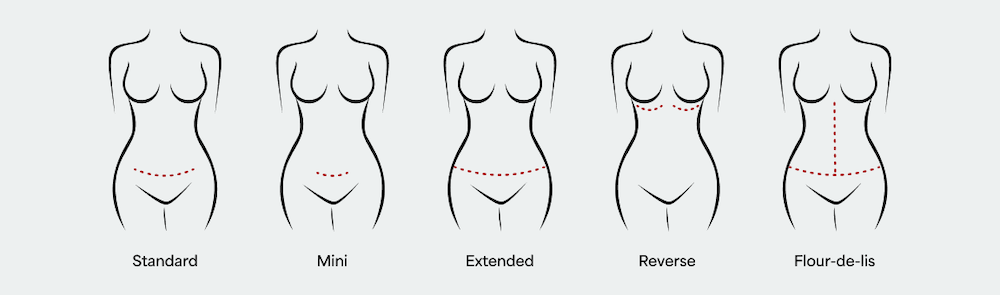
- Traditional (full) tummy tuck – This technique targets issues both above and below the belly button. It involves removing both excess skin and fat and repairing separated abdominal muscles, otherwise known as rectus diastasis.
- Extended abdominoplasty – An extended tummy tuck is a more comprehensive version of a standard tummy tuck. It not only focuses on the front of the abdomen, but also includes the sides and waist. The incision is longer than in a standard tummy tuck, going past the hips toward the lower back. This allows for the removal of more skin and fat from the abdomen and sides. The result is a more defined waist and a slimmer appearance. This procedure is different from a circumferential body lift, which treats the back as well and lifts the buttocks.
- Mini tummy tuck – A mini tummy tuck focuses on removing extra skin and fat located in the lower abdomen, specifically below the belly button. Typically, the incision is shorter in length and there is no incision around your belly button.
- Fleur-de-lis tummy tuck (also called a vertical abdominoplasty) – This is a type of tummy tuck for those with a lot of extra skin in both horizontal and vertical directions, often following major weight loss. A vertical incision from the lower abdomen to the sternum allows the procedure to remove skin both sideways and lengthwise.
- Reverse tummy tuck – A reverse tummy tuck is a procedure that tightens loose skin in the upper abdomen, above the belly button. During surgery, Dr. Tabbal makes an incision within the breast crease to minimize visible scarring. He lifts and pulls the loose skin from the upper abdomen upward and removes the excess. This surgery is best suited for patients with sagging or loose skin only above the belly button or those who have had a standard tummy tuck and still have excess skin in the upper abdomen.
Tummy Tuck vs. Liposuction
A tummy tuck and liposuction are fundamentally different but complementary procedures. In fact, Dr. Tabbal often combines liposuction with a tummy tuck to enhance the results.
These are some of the key differences between a tummy tuck and liposuction:
Tummy Tuck
- Repairs and tightens separated muscles
- Removes excess skin
- Requires a horizontal incision
Liposuction
- Removes stubborn fat pockets
- Doesn’t address concerns about excess skin
- Removes fat in the midsection and other areas of the body
- Requires small, nearly invisible incisions
What Are the Details of a Tummy Tuck Procedure?
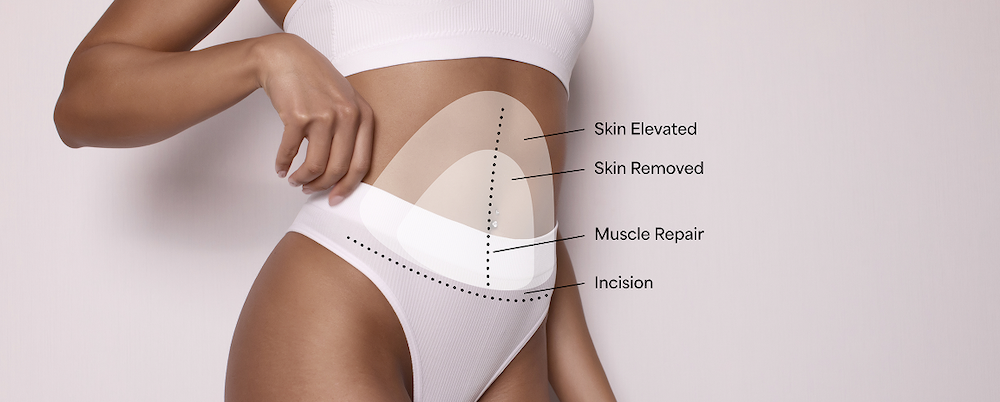
A tummy tuck (abdominoplasty) is performed under general anesthesia and typically takes between two and three hours. The surgery begins with Dr. Tabbal making a low incision along the abdomen. He makes this incision to tighten the abdominal muscles (either above and/or below the belly button) and removes any excess skin. When excess fat is present, Dr. Tabbal often uses the SAFELipo® technique to enhance the area’s contour. This advanced liposuction technique helps to separate, remove, and smooth out fat. This makes fat removal more precise and reduces the risk of uneven contours.
After shaping is finished, the skin is put back in place. Dr. Tabbal uses special stitches called progressive-tension sutures. These help reduce the chance of seromas and ease tension on the scar. Finally, Dr. Tabbal closes the incision in a layered fashion. During the procedure, Dr. Tabbal carefully considers how the appearance of the belly button. He makes sure not to pull the skin too tight or create too much tension. This focus is crucial for a natural-looking belly button and a smooth, balanced abdominal profile. His dedication to subtle, refined results is evident in his before-and-after gallery.


What Can I Expect During Recovery from Tummy Tuck Surgery?
After surgery, patients wear a compression garment to minimize swelling and support the abdomen while healing. Not all patients need drains after surgery. Dr. Tabbal is experienced in the drainless tummy tuck technique and uses it for certain patients. Whether you need a drain or not is best decided during your consultation. If liposuction is done at the same time as your tummy tuck, Dr. Tabbal often recommends using drains to help prevent fluid pockets called seromas from forming after surgery.
When drains are used, they are usually removed within a week or less. Today’s newer drain designs are associated with minimal discomfort, even at the time of removal.
It is normal to experience some bruising, swelling, and tenderness in your abdominal area after surgery. These symptoms will improve over time. Severe pain is rare because of Dr. Tabbal’s meticulous surgical technique and his use of a long-lasting numbing medication (EXPAREL) to help reduce pain during recovery. This new medication can give significant pain relief for up to three days after the surgery.
The timeline for returning to daily activities will vary based on the type and extent of the surgery. Most patients can work from home and return to desk jobs in one to two weeks. However, they should avoid more physically demanding work for a longer time to help their body heal completely.
Dr. Tabbal and his team provide thorough post-operative care and schedule regular follow-up visits to help patients during their recovery. Even though detailed written instructions are provided long before surgery, Dr. Tabbal is always present and available to guide your healing, and answer any questions you may have.
Tummy Tuck Recovery Timeline
While patient experiences can vary, expect recovery to progress according to the following general timeline:
- Drains removed – 3 to 10 days
- Return to non-strenuous work – 2 weeks
- Stand upright – 7 to 10 days
- Resume light exercise – 3 to 4 weeks
- Stop wearing compression garments – 3 to 4 weeks
- Resume strenuous exercise – 6 to 8 weeks
- Results become visible – 4 to 6 months
- Achieve final results – 1 year
Dr. Tabbal is dedicated to helping his patients recover from their body contouring surgery with ease. To support this, he works with a team called The PostOP Collective. They offer personalized, one-on-one post-operative nursing care, either in the comfort of your home or within the privacy of a luxury hotel in Dallas-Fort Worth.

Will My Tummy Tuck Scars Be Obvious?
Scarring is an inherent and unavoidable part of any tummy tuck procedure. The incision is placed low on the abdomen. This way, it can be easily hidden under most types of clothing, including many bikini and underwear styles. In addition to carefully placing each incision and meticulously closing each incision, Dr. Tabbal also gives each patient clear instructions on how to care for their incision as it heals. This helps reduce the scar’s visibility in the long run.
What Does a Tummy Tuck Cost in Frisco and Plano?
In north Dallas communities such as Frisco, Plano and Prosper, the cost of a tummy tuck can vary. It depends on several factors, including the technique used and the complexity of the surgery. After your consultation with Dr. Tabbal, our team will give you a detailed price quote which you can take home and review at your convenience. Since every patient’s needs are different, the final cost will reflect your individual circumstances.
To read more about how much tummy tucks surgery costs in north Dallas, read Dr. Tabbal’s blog on the topic.
Generally speaking, the factors that most significantly influence the overall price of a tummy tuck include:
- The extent of skin removal, fat reduction, and muscle repair required
- The surgical approach best suited to your anatomy and goals
- Any additional procedures performed in conjunction
- A surgeon’s level of experience, expertise, and standing in the field
- Facility fees associated with the surgical center
- Anesthesia costs
- Post-operative nursing care
- The geographic location of the practice
To make tummy tuck surgery affordable for different budgets, Dr. Tabbal partners with Cherry®, PatientFi®, and CareCredit®. These companies offer flexible payment plans for those who qualify. If you want to learn more about our financing options, a team member will gladly help you during your consultation.
Can You Get Pregnant After a Tummy Tuck?
From a medical viewpoint, there is usually no health issue that prevents a patient have having a tummy tuck before having children. However, Dr. Tabbal recommends that patients wait until their family is complete before having body contouring surgery. The main reason for this advice is that getting pregnant later can stretch the skin again and cause a condition called rectus diastasis, where the abdominal muscles separate. In most situations, this means that patients may need another surgery to regain the firmer, flatter stomach they got from the first procedure.
If you are concerned about getting pregnant after a tummy tuck, there is usually no need to worry. Aside from the cosmetic changes already discussed, having a baby after a tummy tuck is not expected to cause any health risks for either the mother or the baby.
Can I Get a Non-Surgical Tummy Tuck?
There are some non-surgical options that may slightly improve the look of the abdomen, but none are as effective as a tummy tuck. Treatments like laser skin tightening and CoolSculpting® are often advertised as alternatives to a tummy tuck, but they have important limitations. These methods can’t remove extra skin and don’t do as good a job at reducing fat or tightening the skin as a tummy tuck can. Most importantly, they can’t fix weak or separated abdominal muscles, which is often a problem for those seeking a tummy tuck.
In summary, non-surgical options can be helpful alongside tummy tuck surgery. They may improve results in some situations. However, they cannot replace surgery when the aim is to remove extra skin and fat and fix separated abdominal muscles.
Additional Tummy Tuck Frequently Asked Questions
How safe is a tummy tuck?
A tummy tuck, when performed by a qualified, board-certified plastic surgeon like Dr. Tabbal, is considered a safe and well-recognized procedure. However, like any surgery, it carries some risks. Dr. Tabbal has extensive training at some of the most premier academic institutions in the country. This, alongside his many years of hand-on experience, helps him minimize these risks and prevent complications.
All procedures performed by Dr. Tabbal take place in surgical facilities accredited by The Joint Commission, an organization recognized for its rigorous patient safety and care standards. Anesthesia is administered exclusively by board-certified physician anesthesiologists, providing expert oversight and monitoring from start to finish.
What is a seroma after tummy tuck surgery?
Many body contouring surgeries, including a tummy tuck, can lead to a seroma which is a pocket of clear, pale-yellow fluid builds up under the skin. It can look like a cyst or even swelling. They may go away on their own as the body does its best to absorb the fluid. Often, however, the amount of fluid is too great for the body to absorb. Because seromas can become infected, they should be drained whenever they occur.
How can I reduce swelling after a tummy tuck?
Swelling around the incision and in the abdomen is normal after a tummy tuck and can last for several weeks. During their recovery, patients can take several steps to help reduce swelling, including wearing a compression garment as directed, doing lymphatic massage, reducing salt intake, and following their general post-operative instructions.
How long do I need to wear compression garments after a tummy tuck?
Following a tummy tuck, patients are typically advised to wear their compression garment continuously (day and night, except when showering) for several weeks, though the exact duration may vary from patient to patient. Consistent use of the garment serves several important purposes: it encourages healthy circulation, helps keep swelling under control, protects the incisions as they heal, reduces the risk of fluid accumulation, and supports the newly shaped abdominal contours. Dr. Tabbal provides individualized guidance tailored to each patient’s needs and will monitor their healing progress throughout the recovery period to adjust recommendations as appropriate.
What disqualifies a patient from a tummy tuck?
A tummy tuck may not be the right choice for patients who still have a significant amount of weight to lose, are planning a future pregnancy, smoke and are unable to stop before and after surgery, cannot arrange adequate time away from work or daily responsibilities for recovery, or have an underlying health condition that could make surgery not advisable. If you’re unsure whether you’re a good candidate, Dr. Tabbal welcomes the opportunity to meet with you for a personal consultation to help determine the best path forward.
A tummy tuck might not be the best option for people who still need to lose weight, plan to become pregnant again, smoke and can’t quit before and after the surgery, cannot take enough time off work, or have health issues that make surgery risky. If you’re unsure if this procedure is right for you, Dr. Tabbal would be happy to meet with you for a consultation where you can discuss your options.
At what age should individuals not have a tummy tuck?
A tummy tuck can be a viable option for physically and mentally healthy adults across a wide range of ages. As we age, recovery may take a bit longer, and there might be a slightly higher chance of complications. Dr. Tabbal works with each patient to set realistic expectations based on their individual health and situation.
What happens to my belly button during a tummy tuck?
After the belly button is freed from the surrounding tissue, it can be carefully stitched into the new opening that is made on the skin that has been pulled downwards. This helps maintain its natural appearance. Many patients are happy to find that a more refined belly button is an extra benefit of their tummy tuck surgery.
How many sizes can I drop after tummy tuck surgery?
Although the actual change in body weight after a tummy tuck is usually not too significant, most patients will find that they drop two to three clothing sizes following surgery. More importantly, they usually notice that the change in their overall appearance gives the impression that they’ve lost a much more significant amount of weight.
Contact our office today to learn more about tummy tuck or to schedule a consultation with Dr. Tabbal.
Related Blogs

Mommy makeover surgery has become one of the most sought-after procedures in plastic surgery for good reason: it helps mothers …

If you’re considering a tummy tuck, also known as an abdominoplasty, one of the first questions you’ll probably ask is: …

A mommy makeover is one of the most commonly requested procedures in aesthetic plastic surgery, but it is also one of …